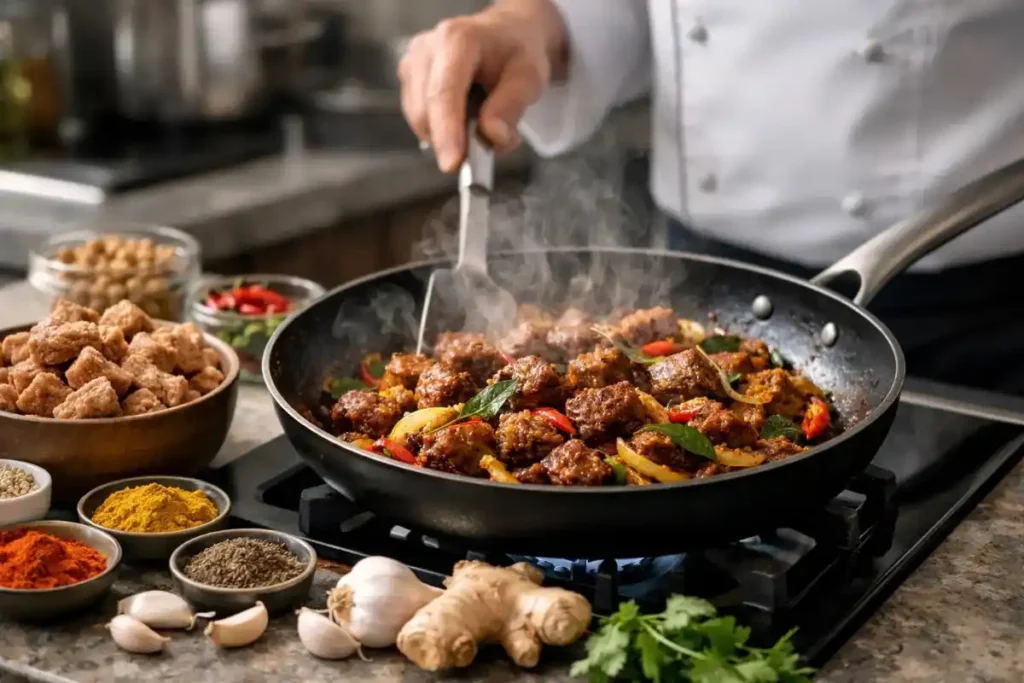
Cooking plant-based meat requires more than simply substituting it for animal protein. Many first-time cooks struggle because it’s not meant to be cooked exactly like animal meat, overcooking or improper handling can ruin texture and flavor. Modern plant-based protein foods are engineered for familiar dishes, making it easier to follow traditional recipes. This vegan meat cooking guide teaches how to cook with plant based meat effectively and how to prepare plant based meat for perfect results, especially in meat substitutes for Indian cooking.
H2: What Is Plant-Based Meat Made Of and Why It Matters in Cooking
Transparency in ingredients builds trust. Knowing what goes into your plant-based meat helps in selecting the right cooking methods and achieving ideal texture and flavor. Modern plant-based meat primarily consists of plant proteins and dietary fibres designed to mimic the structure of animal meat, making this a complete plant based meat cooking guide for selecting the right cooking methods.
H3: Key Ingredients and Their Cooking Roles
Pea protein, soy protein, and wheat gluten create plant protein structure which delivers two essential qualities of bite and chewability. Dietary fiber functions to maintain moisture content in the material. Corn starch ensures the product maintains consistent texture throughout. The application of clean label plant-based food which lacks artificial preservatives leads to minor changes in cooking duration. The process requires precise temperature control to achieve optimal results with vegan meat components.
H3: How Plant-Based Meat Reacts to Heat Compared to Animal Meat
Vegan meat texture differs from animal meat in terms of heat stability and moisture retention, which results in relatively quicker moisture evaporation from plant-based meat products during cooking. The correct method for cooking plant based meat products requires using low flame with proper rest time because this approach will produce optimal meat tenderness and flavor which traditional meat cooking methods don’t need. This is especially true with retort processed plant based meat products such as Greenmeat, as the product is already cooked during retort packing, the cooking at consumer end is mainly for giving the right spice flavours to the pieces.
H2: Preparing Plant-Based Meat Before Cooking (Critical Step)
Proper preparation ensures plant-based meat cooks evenly and retains its texture. Gently separate shelf-stable chunks, and cut uniformly, if you prefer smaller pieces. Unlike traditional meat, there is no need to rinse plant based meat. However, marination enhances flavor, while shallow frying enhances the texture & taste, and also prevents the pieces from becoming too soft during long cooking. Careful handling prevents rubbery, dry, or uneven bites.
H3: Separating and Handling Shelf-Stable Plant-Based Chunks
When preparing plant-based chunks from shelf stable vegan meat, gently loosen compacted pieces and cut into uniform sizes. Proper handling ensures even cooking, consistent texture, and prevents dry or uneven bites.
H3: Marination Techniques That Actually Work
Marinating vegan meat boosts spice absorption and consequently the taste, especially with Indian masala marination. Ideal marination is 15–30 minutes. Plant-based meat absorbs flavors faster, and oil or water-based marinades enhance taste, making dishes rich, aromatic, and perfectly seasoned.
H3: Shallow Frying for Texture Enhancement (Optional but Recommended)
Shallow frying plant-based meat for 1 or 2 minutes improves vegan meat texture, creating a golden exterior while keeping the inside moist. This also improves the taste profile and bite feel of plant based meat.
H2: Core Cooking Methods for Plant-Based Meat
Matching cooking style to dish type ensures perfect plant-based meat results. From thick gravies to dry stir-fries, understanding heat, moisture, and timing helps create flavorful, tender dishes that maintain vegan meat texture and spice absorption.
H3: Cooking in Thick Gravies (Best for Flavor)
- Works well for curries, stews, and masala-based dishes.
- Thicker gravy allows plant-based chunks to absorb flavors evenly.
- Cook on low flame to avoid over-cooking and ensure consistency.
H3: Dry, Semi-Dry & Roast-Style Dishes
- Moisture control is key to prevent rubberiness.
- Temper oil at the end for a glossy finish.
- Stir-frying or dry roasting preserves bite while enhancing spice integration.
H3: Slow Cooking vs Quick Cooking
- Slow-cooked vegan curries develop depth and allow spices to bloom.
- Low-flame cooking below boiling preserves texture.
- Oil separation is an indicator of readiness. Resting post-cooking further improves flavor absorption.
H2: Indian Recipes That Work Perfectly with Plant-Based Meat
Explore regional plant-based meat dishes that preserve authentic Indian flavors. From Kerala vegan curry to Malabar tamarind-based recipes and North Indian Makhani, these dishes use meat substitutes for Indian cooking, letting you enjoy traditional textures and spices while keeping meals fully plant-based and protein-rich, making them perfect plant based meat recipes.
H3: Kerala-Style Varutharacha Plant-Based “Meat” Curry
This Kerala vegan curry uses Greenmeat curry cuts, shallow-fried until golden. Combine dry-roasted masala powders (Kashmiri chili, coriander, cumin, turmeric) into a paste, then sauté with onions, garlic, ginger, curry leaves, and green chilies. Add curry cuts, water, and lightly fried grated coconut, cooking on low flame until oil floats on the thick gravy. Slow cooking develops depth, while coconut and roasted spices enhance umami, making it perfect for curry cuts.
H3: Kerala Neymeen (Fish-Style) Curry Using Plant-Based Meat
Greenmeat curry cuts replace fish in this vegan Malabar tamarind curry. Heat and grind masala powders to a paste, sauté with shallots, garlic, ginger, curry leaves, and optional mustard or fenugreek seeds. Add kudampuli (tamarind), water, and coconut milk if desired, cooking slowly on low flame. Resting the curry allows full flavor absorption. Acid-fat balance, kudampuli infusion, and optional coconut milk layering replicate the taste of traditional Kerala fish curry.
H3: Adapting Traditional Meat & Fish Recipes
Plant-based meat substitutes let you veganize Indian favorites like pepper roast, coconut milk curry, and spicy masala dishes. Adjust cooking times, marination, and moisture control to retain texture and bite. Slow sautéing or low-flame simmering enhances flavor absorption, ensuring that meat replacements deliver authentic taste while maintaining plant-based protein integrity.
H2: Common Mistakes When Cooking Plant-Based Meat
Home cooks make various mistakes which lead to bad results because plant-based meat cooking requires special skills. The primary issue with plant-based meat occurs when chefs overcook the product which leads to over extracted spices and overly tender pieces while thin gravies fail to create the necessary protein coverage. The two main errors people make with vegan meat cooking involve skipping marination and using the same techniques for handling vegan meat as they do for raw animal meat. The process of cooking vegan meat becomes easier when people learn about common cooking errors because it leads to better moisture control and improved taste and complete satisfaction with plant-based meals.
H2: How to Make Plant-Based Meat Taste Richer and More “Meaty”
First-time cooks believe plant-based meat product only offers basic flavor yet actual meaty texture and bite feel, but three professional methods transform the product. The process of oil finishing creates a rich texture, and spice blooming method develops additional scent properties. The process of resting food after cooking allows all flavors to develop their complete taste while combining fat with acid produces an appealing umami taste. The process of mastering these steps in umami vegan cooking enables you to create plant-based dishes which deliver delicious flavors and rich textures that show vegan meat matches the taste of traditional meals.
H2: Nutritional & Practical Benefits of Cooking with Plant-Based Meat
Plant-based meat cooking provides dual advantages of health benefits and food preparation ease. The food provides high protein content and dietary fibre which enables the creation of vegan meals that maintain low fat content. The product contains no cholesterol and no trans fats which makes it good for heart health and clean eating. Many products maintain their shelf stability until customers open them which makes the products useful for preparing meals quickly. The combination of low-fat plant-based food and extended shelf life enables customers to prepare healthy meals without needing to shop frequently or store food immediately.
H2: Who Can Benefit Most from Cooking with Plant-Based Meat?
Plant-based meat is ideal for anyone looking to reduce meat consumption without sacrificing flavor. Flexitarians can enjoy familiar dishes while lowering animal protein intake, and busy families benefit from quick, convenient meal options. Health-focused households gain from high-protein, low-fat alternatives, while those interested in sustainable Indian cooking can make eco-friendly choices. It’s a versatile solution for meat lovers, wellness enthusiasts, and anyone seeking nutritious, convenient meals.
H2: Frequently Asked Questions (FAQ Section)
- Does plant-based meat need to be cooked?
Yes, most require cooking to enhance flavor and texture. But retort packed products can be tried with just marination, as they are already cooked during the retort packing process. - Can plant-based meat replace meat in Indian recipes?
Absolutely, it absorbs gravies, spices, and masala effectively. - How long should plant-based meat be cooked?
Cooking time is generally shorter than animal meat; 10–15 minutes for most curries, longer for slow-cooked gravies. - Can plant-based meat be reheated?
Yes, gently on low flame or microwave with moisture retention to prevent dryness.