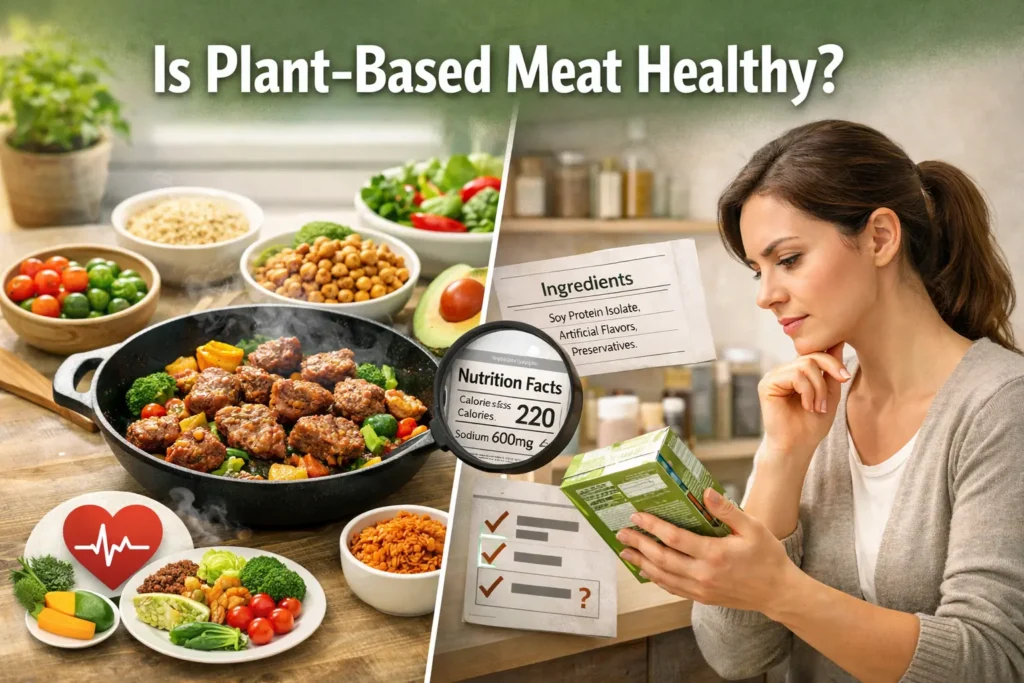
Plant-based meat has become a widely adopted protein choice as consumers prioritise wellness, sustainability and modern nutrition. Still, one key question remains: Is plant-based meat healthy compared with traditional animal meat? For many wellness focused individuals, the answer is increasingly yes, especially when it replaces processed meat. Research on plant-based vs real meat health shows clear differences in nutrient quality, environmental impact and long-term disease risk. Many modern meat alternative nutrition products provide strong plant protein health benefits through ingredients like protein. However, health outcomes depend on formulation. Some options are highly processed (ultraprocessed) and may contain elevated sodium, added saturated fat, additives, artificial flavours and colours. This article offers an evidence-based perspective, guided by insights from the WHO.
What Is Plant-Based Meat Made Of?
Plant-based meat is designed to replicate the taste and texture of animal meat using carefully selected plant-based meat ingredients. Most products rely on protein rich sources such as pea protein isolate, soy protein isolate or wheat gluten, often in the form of protein isolate or textured vegetable protein (TVP). These proteins form the core of the vegetarian meat composition and provide structure and chew.
To replicate the richness of meat, manufacturers add oils like coconut oil or sunflower oil, while binders such as methylcellulose and starch help to maintain texture during cooking. Natural seasonings enhance flavour and many products are fortified with key nutrients such as Vitamin B12 and iron. Some options also include dietary fiber, offering a nutritional benefit that traditional meat does not provide.
Nutritional Comparison – Plant-Based Meat vs Animal Meat
When evaluating overall health impact, understanding the nutritional differences between plant-based meat and animal meat is essential. While both can provide high protein, their effects on heart health, digestion and chronic disease risk vary significantly depending on fat composition, fiber content and processing levels.
Protein Content and Amino Acid Profile
Animal meat naturally contains complete protein with all essential amino acids and high bioavailability. Plant-based meat can also offer complete protein, though its protein digestibility and amino acid balance depend on the formulation (combination of pea and soy isolates provides complete amino acid profile).
Saturated Fat and Cholesterol Levels
A major advantage of plant-based meat is its cholesterol-free protein, which is beneficial to people having high LDL cholesterol levels and reduce cardiovascular strain. However, some brands use coconut oil, which can increase saturated fat intake.
Fiber Content – A Key Difference
Unlike animal meat, which contains zero fiber, plant-based options usually include high percentage of dietary fiber that supports the gut microbiota and digestive health.
Sodium Levels – A Common Concern
Many plant-based meats contain higher sodium levels for flavour and preservation, which may affect blood pressure and long-term cardiovascular disease risk if consumed excessively.
Potential Health Benefits of Plant-Based Meat
Plant-based meat can offer several nutritional advantages when included as part of a balanced diet. Many products provide cholesterol free protein and may support heart, weight and digestive health particularly when they contain lower saturated fat and added dietary fiber.
May Support Heart Health
plant-based meat health benefits contain no cholesterol and depending on the formulation, may have less saturated fat than animal meat, supporting healthier LDL cholesterol levels.
Supports Weight Management
The combination of plant protein and fiber can enhance satiety, helping individuals feel fuller for longer and potentially supporting calorie control.
Better for Digestive Health
Unlike animal meat, many plant-based alternatives include fiber, which promotes gut diversity and supports a healthier microbiome.
Suitable for people with Lactose Intolerance or Meat Allergies
Plant-based meat naturally contains no lactose and can be a suitable option for those with dairy sensitivities, meat allergies, or ethical dietary preferences.
Environmental and Ethical Health Benefits
Choosing plant-based protein supports sustainable agriculture, reduces carbon footprint and avoids antibiotics used in livestock, which contributes to reduced antibiotic resistance.
Things to watch out for in Plant-Based Meat
Plant-based meat can be healthy, but not all products are created equal. Processing levels, sodium content and allergen ingredients are important factors to consider.
High Sodium Content
One of the most common concerns in sodium in vegetarian meat is elevated salt levels used for flavour and preservation. Some products may contain upto 400–600 mg per serving, which adds up quickly against the recommended daily sodium limit of around 2,300 mg.
Ultra-Processed Food Debate
Some plant-based meats fall under the NOVA food classification as ultra processed foods, meaning they are industrial formulations rather than whole food products. This does not automatically make them unhealthy, but it highlights the importance of moderation and ingredient quality.
Added Oils and Saturated Fat
To replicate meat like texture, some brands use coconut oil, which can raise saturated fat content. Excess saturated fat may influence LDL cholesterol, so lower fat formulations are often preferable.
Artificial Additives and Preservatives
Certain products include binders like methylcellulose and preservatives such as sodium benzoate or potassium sorbate. While approved for safety, frequent intake of heavily additive-rich foods may not align with clean label nutrition goals.
Allergen Concerns
Soy and gluten are common ingredients in plant-based meat, making these products unsuitable for individuals with soy allergies or conditions such as celiac disease.
Is Plant-Based Meat Healthier Than Regular Meat?
Is plant-based meat healthy? The answer depends on what it replaces. Research on processed meat health risks is clear, the WHO carcinogen classification links processed meats to a higher risk of colorectal cancer. Although unprocessed red meat is not as bad, increased consumption has been linked to augmented cancer and several life style diseases including cardiovascular issues. In comparison, plant-based meat can be healthier in a situation when it has less saturated fat and no cholesterol.
Who Should Consider Eating Plant-Based Meat?
Plant-based meat can be a valuable option for:
- Flexitarians seeking balanced protein choices
- Individuals reducing red meat intake
- Athletes needing convenient plant protein
- Heart-conscious consumers managing cholesterol
- Ethical and environmentally driven eaters
Who Should Be Careful?
Certain groups should evaluate ingredients more closely, including:
- People with soy allergies
- Individuals with gluten intolerance
- Those following low sodium diets
- Anyone relying on plant-based meat as their sole protein source
How to Choose a Healthy Plant-Based Meat Product
Not all products qualify as clean nutrition. Knowing how to choose vegetarian meat comes down to ingredient quality and label awareness. The healthiest options tend to be simple, protein rich and minimally processed.
Checklist for clean-label plant-based meat:
- Prefer shorter ingredient lists
- Choose clean label plant-based meat with fewer additives
- Check protein per serving
- Monitor sodium content
- Avoid artificial preservatives
These steps help identify truly healthy meat alternatives.
Can You Eat Plant-Based Meat Every Day?
Plant-based meat can fit into daily eating patterns, but it should not replace whole foods entirely. Many people also ask, is vegetarian meat healthy when consumed regularly and the answer depends on overall diet quality and product ingredients. A vegan diet based on a combination of legumes, vegetables, whole grains and a good quality vegetarian meat is the right approach.
Expert Opinions and What Research Says
Leading health organisations, including the American Heart Association and the Harvard School of Public Health, recognise that plant forward diets can support heart health and reduce chronic disease risk. While there are some good plant based meat brands, experts also note that long-term research on ultra processed meat substitutes is still developing.
The Final Verdict – Is Plant-Based Meat Healthy?
So, is plant-based meat healthy? Yes, especially as an alternative to processed meats. The plant-based meat health benefits lies in the ingredient profile, lower saturated fat, controlled sodium and clean formulation. High-quality options like Greenmeat make plant-based cooking easy, offering a modern protein solution that fits naturally into the vegan meat Indian kitchen. With moderation, label clarity and a balanced diet, plant-based meat can be a smart and health supportive step forward among the best plant based meat substitutes.